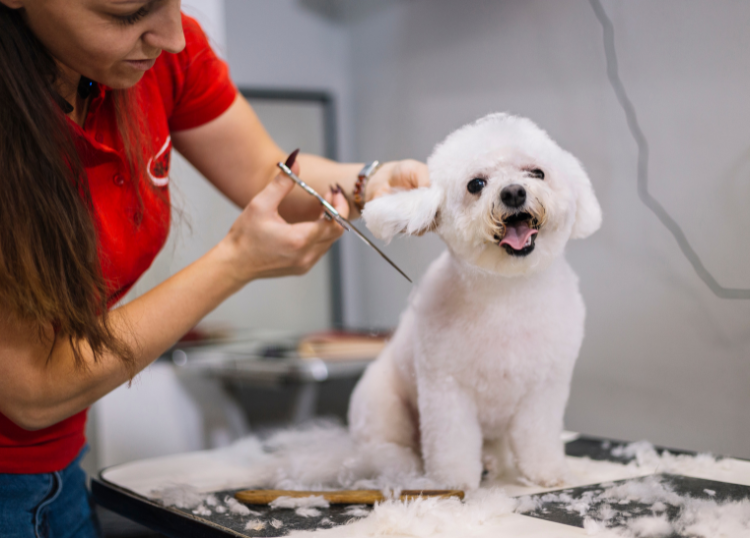
Grooming is about far more than keeping your pet looking neat. Regular grooming helps maintain healthy skin and coats, reduces shedding, prevents painful matting, and allows potential health concerns to be identified early.
There is no single grooming schedule that suits every pet. Factors such as breed, coat length, age, activity level, and health all influence how often grooming should take place.
Why Regular Grooming Matters
Routine grooming provides several important benefits for both pets and their owners.
These include:
- Healthier skin and coat
- Reduced shedding
- Fewer tangles and mats
- Better hygiene
- Early detection of skin problems, parasites, or lumps
- Greater comfort for your pet
Regular grooming can also strengthen the bond between you and your pet by making handling and care a positive experience.
Grooming Frequency for Dogs
Dogs have different grooming needs depending on their coat type.
As a general guide:
- Short-haired breeds: Every 6 to 8 weeks, with regular brushing at home.
- Medium-coated breeds: Every 4 to 6 weeks.
- Long-haired breeds: Every 4 to 6 weeks, with frequent brushing between appointments.
- Curly or non-shedding breeds: Every 4 to 8 weeks to prevent matting and maintain coat health.
Professional groomers can recommend a schedule suited to your dog's individual needs.
What About Cats?
Many cats groom themselves effectively, but they can still benefit from occasional grooming.
Professional grooming may be helpful for:
- Long-haired cats
- Senior cats
- Overweight cats
- Cats prone to matting
- Cats that struggle to groom themselves
Regular brushing at home also helps reduce loose hair and hairballs.
Brushing Between Grooming Appointments
Brushing is one of the most important parts of coat maintenance.
Depending on your pet's coat, brushing may be needed:
- Daily
- Several times a week
- Weekly
Regular brushing removes loose fur, distributes natural oils, and prevents knots from developing.
Bathing Your Pet
Bathing frequency depends on your pet's coat, lifestyle, and skin condition.
Pets that spend a lot of time outdoors may require more frequent baths than indoor pets.
Avoid excessive bathing, as this can strip the coat of its natural oils and cause skin irritation. Always use shampoos specifically formulated for pets.
Nail Trimming Is Essential
Long nails can affect your pet's comfort and movement.
Nails should be checked regularly and trimmed as needed to help prevent:
- Discomfort when walking
- Split or broken nails
- Joint strain
- Injuries caused by overgrown nails
If you're unsure how to trim your pet's nails safely, a professional groomer or veterinarian can assist.
Don't Forget Ear and Dental Care
A complete grooming routine includes more than coat care.
Regularly check your pet's:
- Ears for dirt, wax, or signs of infection
- Teeth for plaque and tartar build-up
- Eyes for excessive discharge
- Paw pads for cuts or debris
Routine care helps identify potential health issues before they become more serious.
Signs Your Pet Needs Grooming
Even if you follow a regular schedule, your pet may need attention sooner if you notice:
- Matted fur
- Excessive shedding
- Unpleasant odours
- Dirty ears
- Long nails
- Tangled coat
- Visible skin irritation
Addressing these issues promptly helps keep your pet comfortable and healthy.
Work with a Professional Groomer
Professional groomers have the experience and equipment to care for different coat types and breeds.
They can also identify issues that may require veterinary attention, such as skin infections, parasites, or unusual growths.
Establishing a regular grooming routine with a trusted professional can make caring for your pet much easier.
Final Thoughts
There is no universal grooming schedule for every pet, but regular care is essential for maintaining good health and comfort. By considering your pet's breed, coat type, lifestyle, and individual needs, you can develop a grooming routine that keeps them clean, comfortable, and happy throughout the year. Whether grooming at home or visiting a professional, consistency is the key to supporting your pet's overall wellbeing.