Alarm monitoring and armed response are often mentioned together when people compare home or business security services.
They are connected, but they are not the same thing.
Alarm monitoring concerns what happens when a security system sends a signal to a monitoring facility. Armed response concerns what happens when security personnel are dispatched to the property following an alarm or other qualifying incident.
Understanding this distinction matters when comparing security packages.
A service described as "monitored security" does not necessarily tell you exactly what happens after an alarm is received. Similarly, armed response depends on communication between the property, monitoring systems and response personnel.
Knowing how these parts fit together makes it easier to ask a security provider the right questions.
What Is Alarm Monitoring?
Alarm monitoring connects a property's security system with a monitoring facility or control room.
When the system detects a configured event, it can send a signal for attention.
Depending on the equipment and service, this could relate to an intrusion detector, panic button or another connected security device.
The monitoring team receives information from the system and follows the procedure associated with that type of signal.
That procedure might involve contacting the customer or another designated person, checking available information or arranging an appropriate response.
Monitoring is therefore primarily the communication and assessment part of the service.
It allows an alarm signal to reach someone who can act on it rather than relying entirely on people at the property to notice the alarm.
What Is Armed Response?
Armed response involves trained security personnel being dispatched when the circumstances and agreed procedure require an on-site response.
The responder travels to the property and acts within the scope of the security service, applicable procedures and legal requirements.
This is the physical response component.
An alarm system can make noise and monitoring can alert a control room, but neither of those actions places a security officer at the property.
Armed response provides that additional layer.
The precise service can differ between providers, so customers should understand what responders are expected to do when they arrive and what happens if further assistance is required.
How the Two Services Work Together
A common arrangement combines monitoring and armed response.
Imagine that a detector activates while nobody is home.
The alarm system generates a signal, which is transmitted to the monitoring facility. The monitoring team receives it and follows the appropriate procedure. If the circumstances require a response under the customer's service agreement, a response officer can then be dispatched.
In this example, monitoring handles the signal while armed response provides the on-site component.
The process may vary according to the type of alarm, the system installed and the security company's procedures.
That is why customers should ask providers to explain the full chain of events rather than assuming every company handles alarm activations identically.
A Local Alarm Is Different From a Monitored Alarm
Some security systems operate primarily as local alarms.
A siren activates at the property, alerting occupants, neighbours or anyone nearby.
That can still serve a security purpose, but it is different from having the alarm communicate with a monitoring facility.
If nobody is present to hear the siren, a purely local system may have limited ability to trigger further action.
A monitored system is intended to communicate the relevant signal beyond the property.
When comparing alarm installations, confirm whether monitoring is included, how signals are transmitted and what happens if the usual communication method is unavailable.
Panic Signals May Follow a Different Process
Not every alarm signal necessarily receives the same treatment.
A panic activation can indicate a different type of situation from an ordinary detector activation.
Security providers may therefore have specific procedures for panic signals and other priority events.
This distinction is important for households and businesses.
Customers should know which buttons or devices send panic signals, who receives them and what action follows.
Employees and household members who may need to use the system should also understand the difference between ordinary alarm operation and emergency features.
A security feature is considerably less useful if the people relying on it do not know how it works.
Monitoring Depends on Reliable Communication
For monitoring to work, the property's security system needs a way to communicate with the monitoring infrastructure.
The technical method can vary according to the system and provider.
What matters to the customer is understanding how the connection works and what happens if there is a communication problem.
Ask whether the system can identify communication failures and whether alternative communication paths are available where appropriate.
Power interruptions should also be considered.
Alarm panels and communication equipment may depend on backup power to continue operating when the normal electricity supply is unavailable.
A monitored alarm service therefore depends on more than the sensors installed around the property.
The communication path and supporting equipment matter too.
Armed Response Is Not the Same as Police Response
Private armed response and the South African Police Service perform different roles.
A private security company provides services under an agreement with its customer, while the police have public law-enforcement responsibilities.
Depending on the circumstances, a security provider may contact the police or other emergency services.
Customers should not assume, however, that an alarm automatically means the police have been notified.
Ask the provider what its response officers do when they identify evidence of a crime, emergency or other incident requiring additional assistance.
Understanding these procedures beforehand can prevent confusion during a stressful event.
Response Time Needs Context
Response time is understandably important when choosing an armed response provider.
It should still be discussed carefully.
Actual arrival times can be influenced by factors such as distance, road conditions, traffic, the location of available response vehicles and the circumstances at the time.
Instead of relying only on a broad marketing statement, ask how the provider services your specific area.
Find out whether response vehicles regularly operate nearby and how incidents are allocated.
Local coverage can be an important part of assessing an armed response service because the physical location of response personnel affects the practical service being offered.
False Alarms Affect the Whole System
False alarms are more than an inconvenience.
Frequent unnecessary activations can waste time, cause frustration and create repeated response call-outs.
Common causes can include incorrect use, poorly positioned or unsuitable detection equipment, maintenance problems and environmental factors.
Pets may also need to be considered when selecting and configuring certain detection systems.
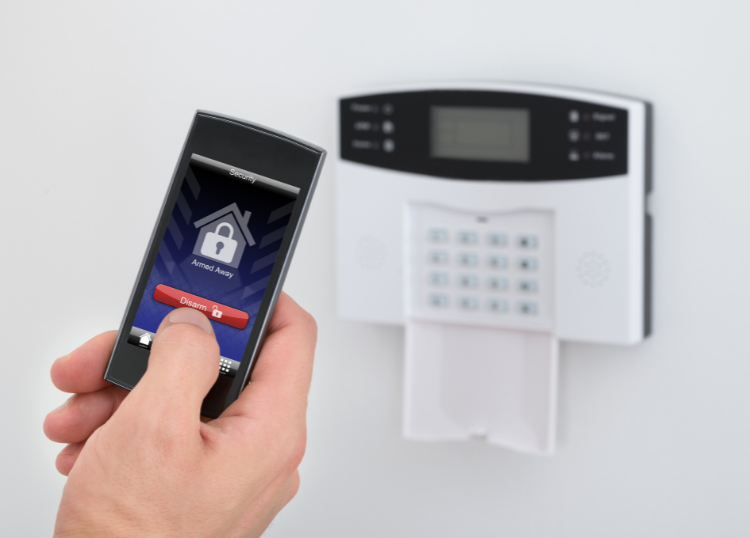
Users should know how to arm and disarm the system correctly and what to do after accidentally activating it.
If false alarms occur repeatedly, investigate the cause rather than simply becoming accustomed to them.
A security system should be configured around the way the property is actually used.
The Alarm Equipment and Security Service Are Separate Decisions
Choosing a security provider is not only about deciding who will respond.
The equipment installed at the property also matters.
Detectors need to suit the areas they protect. Door and window protection should reflect likely access points, while panic devices need to be positioned where they can be reached when required.
Businesses may have additional considerations around opening and closing procedures, staff access and areas containing valuable equipment or stock.
The alarm installation, monitoring service and response service should therefore be considered as parts of one security arrangement.
Strong response coverage cannot compensate for a system that fails to detect an incident effectively.
Home and Business Requirements Can Differ
A household and a commercial property may require different procedures even when both use monitored alarms and armed response.
Homes need to account for residents, visitors, pets and periods when the property is empty.
Businesses may have multiple employees, contractors, cleaners, opening procedures and different access permissions.
Commercial sites can also have periods when employees work outside normal hours.
The security arrangement should reflect these patterns.
For example, the provider may need accurate contact information for designated staff members and clear procedures for alarm activations at different times.
The more complex the property, the more important it becomes to understand how monitoring and response procedures fit normal operations.
Ask What Happens After an Alarm Is Received
One of the most useful questions for a potential security provider is also one of the simplest:
What happens when my alarm activates?
The answer should take you through the process.
How is the signal received? Does the control room contact anyone? Under what circumstances is a responder dispatched? What happens when the responder arrives? How is the customer informed about the outcome?
This provides far more useful information than simply asking whether monitoring or armed response is included.
It also helps reveal differences between service packages that may initially appear similar.
Understand What Your Monthly Fee Covers
Security packages can combine equipment, monitoring, response and other services in different ways.
Before signing an agreement, establish exactly what the recurring fee includes.
There may be separate costs for installation, equipment, maintenance, additional users or other services.
Contract terms can matter as well.
Understand the agreement period, cancellation provisions, equipment ownership and responsibilities for maintaining the alarm system.
Comparing security services purely on monthly price can be misleading when the packages have different scopes.
Compare the actual service and contractual terms alongside the cost.
Check the Security Provider's Credentials
In South Africa, private security services are regulated, making provider credentials an important part of the selection process.
Customers should verify that the security business and relevant personnel meet applicable regulatory requirements.
Do not rely only on logos, uniforms or claims made in advertising.
Ask for the provider's registration details and verify them through the appropriate official channels.
Credentials are only one part of choosing a security company, but they provide an important starting point before considering coverage, equipment, service procedures and pricing.
Keep Contact Details and Instructions Current
Monitoring procedures depend on accurate customer information.
If the control room needs to contact an owner, manager or other nominated person, outdated telephone numbers can create unnecessary problems.
Review contact details whenever staff change, tenants move or family circumstances change.
The same applies to instructions relating to the property.
If access arrangements, keyholders or other relevant information change, tell the security provider.
A monitoring service can only work with the information available to it.
Keeping that information current is a simple but important part of maintaining the overall security arrangement.
Test and Maintain the System
Alarm monitoring and armed response depend on the alarm system being able to detect and communicate an event.
Equipment therefore needs appropriate maintenance and testing.
Batteries can deteriorate, sensors can develop faults and changes to a property can affect how equipment performs.
Renovations are a good example.
Moving walls, adding rooms or changing the way a space is used can leave an old alarm layout poorly suited to the property.
Periodic testing can identify problems before the system is needed during a genuine incident.
Follow the provider's recommended testing and maintenance procedures, particularly when checking any function that could generate an unnecessary response call-out.
Final Thoughts
Alarm monitoring and armed response perform different but closely related roles.
Monitoring deals with receiving alarm signals and following the procedure attached to those signals. Armed response provides the physical dispatch of security personnel when an on-site response is required under the service arrangement.
For many properties, the two services work together.
The important issue is understanding exactly how your particular security package operates.
Ask how alarm signals are communicated, what happens in the control room, when responders are dispatched and what the response procedure involves. Check the provider's credentials, local coverage, contract terms and the condition of the alarm equipment itself.
A security service is easier to assess when you understand the complete process from the moment a detector or panic device activates to the actions that follow at the property.