A home can be cleaned regularly and still reach a point where it needs more detailed attention.
Routine cleaning deals with the work that keeps rooms comfortable and presentable from week to week. Floors are cleaned, bathrooms receive attention, surfaces are wiped and general household dirt is kept under control.
Deep cleaning goes further.
It concentrates on accumulated dirt, less accessible areas and tasks that are not normally completed every week. That might mean cleaning behind furniture, paying closer attention to kitchen grease or working through areas that have gradually been overlooked.
Both types of cleaning are useful. The difference is mainly one of scope, detail and frequency.
What Does Routine Cleaning Usually Include?
Routine cleaning covers the recurring tasks required to keep a home reasonably clean.
The exact service will differ between households and cleaning companies, but it commonly includes work such as vacuuming or sweeping floors, mopping suitable surfaces, dusting accessible areas, cleaning bathrooms and wiping kitchen surfaces.
Bedrooms and living spaces may also be tidied as part of the process, depending on the arrangement.
The purpose is maintenance.
Regular cleaning prevents ordinary household dirt from building up too quickly and makes the home easier to manage over time.
Because these tasks are completed frequently, the cleaner generally does not need to spend extensive time on every cupboard, corner or hard-to-reach surface during each visit.
What Makes a Deep Clean Different?
A deep clean usually covers the normal cleaning tasks while adding work that requires more time and detail.
The cleaner may concentrate on areas where dust, grime, grease or residue has accumulated gradually.
That can include skirting boards, door frames, light fittings, accessible areas behind furniture, detailed bathroom surfaces and parts of the kitchen that are not included in everyday cleaning.
The exact definition varies considerably between cleaning companies.
One company may include the inside of certain appliances in its deep-cleaning package, while another may charge separately. Windows, upholstery, carpets and high-level cleaning can also fall outside a standard package.
This makes it important to check the scope rather than assuming that the phrase "deep clean" always means the same thing.
Kitchens Often Show the Difference Clearly
Kitchens are used every day, which makes them particularly prone to gradual build-up.
Routine cleaning generally keeps worktops, sinks, floors and commonly used surfaces clean.
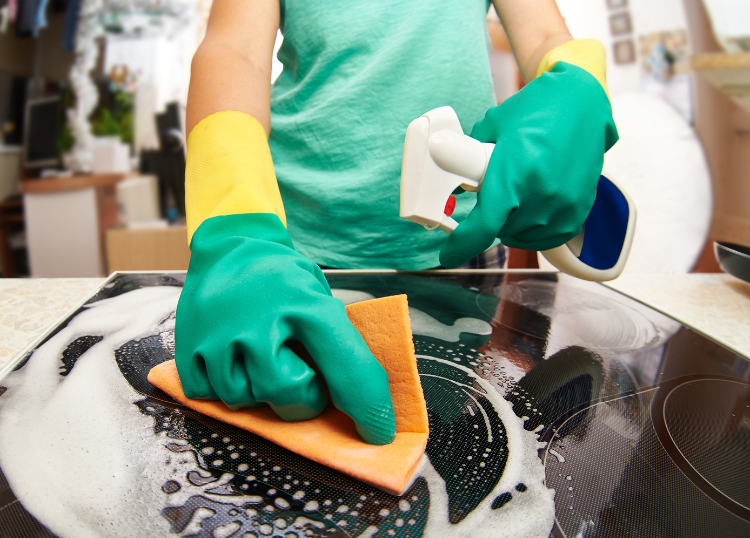
A deeper kitchen clean may give more attention to grease around cooking areas, cupboard fronts, splashbacks, fittings and less accessible corners.
Appliances can require additional work as well.
Cleaning inside an oven or refrigerator is very different from wiping its exterior, so confirm whether appliance interiors form part of the service.
A kitchen can appear clean at first glance while still having accumulated residue in areas that are rarely included in a quick weekly clean.
Bathrooms Can Require More Detailed Attention
Bathrooms also benefit from periodic deeper cleaning.
Routine work usually deals with toilets, basins, showers, baths, mirrors and floors.
Over time, however, residue can accumulate around taps, shower fittings, grout, corners and other areas exposed regularly to water and bathroom products.
A deep clean provides more time to work on these details.
Some staining, damaged sealant or discoloured grout cannot simply be cleaned back to a new condition. It is useful to distinguish between dirt that can be removed and materials that have deteriorated and may require maintenance or replacement.
Deep Cleaning Reaches Areas That Are Easy to Miss
Some parts of a home receive very little attention during normal cleaning.
The tops of cupboards, spaces behind movable furniture, window tracks, door frames and skirting boards can gradually collect dust and dirt.
Because these areas are not immediately visible, they are easy to postpone.
That does not necessarily indicate poor routine cleaning.
A weekly or fortnightly service has limited time and should normally concentrate on the areas that have the greatest effect on everyday cleanliness.
Periodic deep cleaning provides an opportunity to work through lower-frequency tasks without making every routine visit unnecessarily long.
How Often Do You Need a Deep Clean?
There is no single schedule that suits every household.
A home occupied by one person may accumulate dirt very differently from a busy family home with children and pets.
Cooking habits, ventilation, flooring, surrounding conditions and the amount of foot traffic can all affect how quickly a deeper clean becomes useful.
Some households schedule one seasonally. Others arrange a deep clean once or twice a year or whenever there is a particular need.
The condition of the property is a better guide than an arbitrary calendar.
If routine cleaning is no longer dealing with accumulated grime in less frequently cleaned areas, it may be time for more detailed work.
A Deep Clean Can Be Useful Before Starting Regular Cleaning
Cleaning companies may recommend a deeper initial service before beginning recurring visits.
There is a practical reason for this.
If a property has not been professionally cleaned for some time, a routine appointment may not provide enough time to address existing build-up while also completing normal maintenance tasks.
A more thorough first clean can establish a cleaner starting point.
Regular visits can then concentrate on maintaining that condition.
This approach can also make expectations clearer because the routine cleaner is not continually trying to catch up with older cleaning tasks.
Moving Home Can Call for a Different Level of Cleaning
Moving into or out of a property often creates a need for more detailed cleaning.
An empty home exposes areas that are normally covered by beds, sofas, appliances and other furniture.
This can make it easier to clean floors, cupboards and less accessible surfaces thoroughly.
Move-in and move-out cleaning may overlap with deep cleaning, but the services are not necessarily identical.
A moving clean might include empty cupboards and other areas that would normally contain personal belongings, while a standard deep clean in an occupied home may concentrate on different tasks.
Again, the service description matters more than the label.
Spring Cleaning Is Often a Form of Deep Cleaning
Spring is a popular time to deal with cleaning tasks that have accumulated through the year.
A spring clean may include much of the same work as a professional deep-cleaning service, particularly when attention shifts towards cupboards, windows, less-used rooms and areas behind furniture.
It can also involve decluttering and reorganising.
These tasks are related to cleaning but are not always included in a professional cleaning service.
If you want cupboards sorted, unwanted items removed or belongings reorganised, discuss this beforehand rather than assuming it forms part of the booking.
Deep Cleaning Takes Longer
The additional detail involved means a deep clean generally requires more time than a routine visit to the same property.
The condition and size of the home can make a significant difference.
A relatively tidy apartment that receives regular cleaning may need only targeted attention. A larger property that has gone without detailed cleaning for a long period can require substantially more work.
This is why cleaning companies may ask questions about the property before providing a quotation.
Photographs, floor area, number of rooms and information about particular problem areas can help establish a more realistic scope.
Deep Cleaning Does Not Mean Every Specialist Service Is Included
There are limits to what should be assumed under a general deep-cleaning service.
Carpet extraction, upholstery cleaning, high external windows, pressure washing and other specialist work may require different equipment or separate appointments.
The same can apply to cleaning after construction or renovation.
Building dust, paint residue, adhesive and other construction-related dirt can require a different approach from ordinary household cleaning.
If the property has a specific problem, describe it when requesting a quotation.
The provider can then confirm whether the work falls within its normal service or requires specialist treatment.
Compare Cleaning Quotes by Scope
Two companies can quote different prices for a "deep clean" while offering substantially different services.
A cheaper quotation may exclude tasks included by another provider.
Before comparing prices, check what each company intends to clean.
Pay particular attention to appliances, windows, cupboards, walls, high surfaces and areas behind furniture. Ask whether furniture will be moved and whether any exclusions apply.
Also establish whether cleaning materials and equipment are supplied or need to be provided by the customer.
Clear scope makes price comparisons much more useful.
Routine Cleaning Helps Maintain the Results
A deep clean can reset the condition of a home, but it does not remove the need for ongoing cleaning.
Dust returns. Bathrooms continue to be used. Cooking creates new grease and residue, and floors collect dirt again.
Routine cleaning helps prevent that everyday build-up from becoming difficult to manage.
The two services therefore work well together.
Deep cleaning deals with accumulated and lower-frequency tasks, while regular cleaning maintains the areas that need attention most often.
A household with an effective routine may also find that future deep cleans are easier because dirt has been kept under better control between them.
Which Type of Cleaning Do You Need?
The condition of the property and the result you expect should guide the decision.
If the home is already in reasonable condition and you mainly need help keeping up with floors, bathrooms, dusting and kitchen surfaces, routine cleaning may be sufficient.
If less accessible areas have been neglected, grease has accumulated or the property has not had a thorough clean for a long time, a deep clean may be more appropriate.
For uncertain situations, describe the condition of the property to the cleaning provider rather than choosing a service based only on its name.
A reputable provider should be able to explain what level of work is appropriate and what the quotation includes.
Final Thoughts
Routine cleaning and deep cleaning serve different purposes.
Regular cleaning manages the work needed to keep a home comfortable from week to week. Deep cleaning provides additional time for accumulated dirt, detailed surfaces and areas that receive less frequent attention.
Neither term has a completely universal definition, so check the scope before booking.
Ask what is included, what is excluded and whether specialist services such as carpet, upholstery, appliance or post-construction cleaning need to be arranged separately.
Choosing the right service is less about selecting the most extensive package and more about matching the cleaning work to the actual condition of the home.