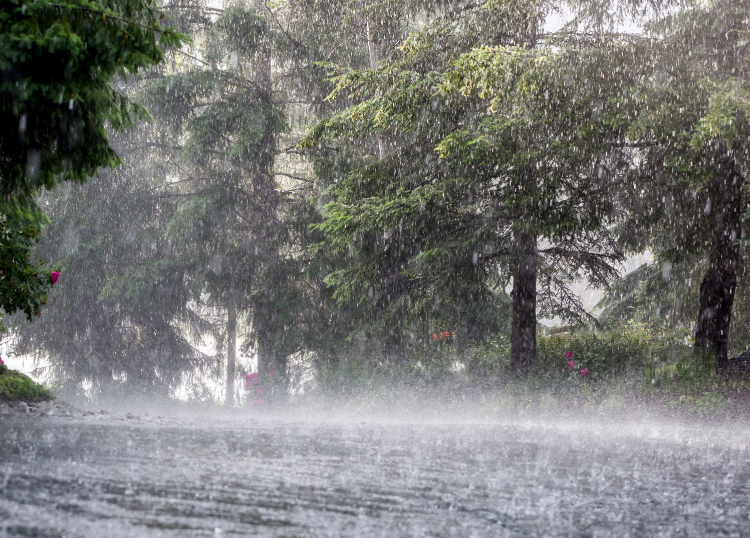
Weather is one of the construction risks that cannot be controlled, but it can be planned for.
That becomes particularly important when building work takes place through the summer rainfall season.
Heavy rain can affect access to the site, excavation, earthworks, concrete operations, material storage and the sequence in which different trades can work. A short storm can sometimes disrupt work long after the rain itself has stopped.
South Africa also does not have one uniform rainfall pattern. Much of the interior receives a significant proportion of its rain during the warmer months, while other regions have different seasonal patterns.
The programme therefore needs to respond to the actual site and location rather than assuming that summer automatically means predictable building conditions.
Good planning will not prevent rain.
It can, however, reduce the number of problems caused by treating wet weather as an unexpected interruption.
Understand the Site's Rainfall Pattern
Start with the location.
Historical seasonal patterns can provide useful context, but they should not be treated as a precise forecast for a particular project.
Some areas experience frequent afternoon thunderstorms. Others may receive longer periods of rainfall or highly localised downpours.
The type of rain matters because it affects construction differently.
A brief intense storm may overwhelm temporary drainage and wash material across a site. Several days of lighter rain can leave soil saturated and delay earthworks even when the rain stops.
The construction programme should allow for the conditions reasonably expected in that area.
Study How Water Moves Across the Site
Rainfall becomes a construction problem when water has nowhere suitable to go.
Before substantial work begins, understand the natural falls of the site and where runoff tends to collect.
Low points, existing drainage channels and neighbouring ground levels all matter.
Construction itself can alter these patterns.
Excavations create new collection points. Stockpiled soil can block natural drainage routes, while temporary roads and compacted areas may increase runoff.
Stormwater management should therefore form part of site planning from the beginning.
Deal With Temporary Drainage Early
Permanent stormwater infrastructure may only be completed later in the project.
The site still needs to handle rain before then.
Temporary channels, pumps or other measures may be required depending on the site and construction stage.
These arrangements should direct water somewhere appropriate rather than simply moving the problem from one part of the property to another.
Temporary drainage also needs maintenance.
A channel filled with construction debris may fail during the first major downpour.
Protect Excavations
Open excavations can collect large amounts of water.
This can delay foundation work and affect soil conditions around the excavation.
Excavated faces may also become unstable depending on the soil, depth and amount of rainfall.
The appropriate protection depends on the project and ground conditions.
Do not assume that pumping the water out automatically restores the excavation to its previous condition.
After significant rainfall, relevant areas may need to be checked before work continues.
Consider Ground Conditions After Rain
The fact that the sky is clear does not necessarily mean the site is ready for work.
Saturated soil can remain difficult to work with long after rainfall stops.
Heavy equipment may churn wet ground into mud, while vehicle movement can damage temporary access routes.
Foundation conditions can also require reassessment where water has affected prepared surfaces.
This is why a programme based only on predicted rainy hours can underestimate the actual disruption caused by wet weather.
Plan Earthworks Around Wetter Periods
Bulk earthworks can be particularly sensitive to rainfall.
Excavation, filling, compaction and grading depend on suitable ground and moisture conditions.
Where the construction sequence allows it, major earthworks may be better scheduled with seasonal conditions in mind.
That does not mean earthworks cannot take place during a rainy season.
It means the programme should acknowledge that productivity may vary and that additional measures may be required to protect prepared areas.
Keep Site Access Usable
A project can be delayed even when the work area itself is reasonably dry if vehicles cannot reach it.
Temporary access roads need to accommodate delivery vehicles, construction equipment and workers through expected weather conditions.
Repeated traffic over wet ground can quickly create ruts and unstable surfaces.
Access planning becomes particularly important on rural properties, steep sites and developments where permanent roads have not yet been constructed.
The route used in dry weather may not remain suitable after several days of rain.
Plan Deliveries With Weather in Mind
Construction programmes depend on materials arriving when needed.
Heavy rain can complicate deliveries, particularly where trucks must cross unfinished ground.
A delayed vehicle can also affect other work if equipment or labour is waiting for the material.
Monitor short-term forecasts when arranging sensitive deliveries.
Where practical, avoid scheduling critical deliveries into periods when access is likely to be difficult.
Good communication between the site team, suppliers and transport providers can prevent unnecessary waiting.
Protect Materials From Water
Not every building material can sit outside through repeated summer storms.
Cementitious products, timber, boards, insulation, finishes and packaged materials may require protection from moisture.
Storage areas should be planned before deliveries begin.
Simply covering materials with plastic may not be sufficient if water can run underneath or condensation becomes trapped.
Follow supplier and manufacturer requirements for storage.
Damaged materials can create both cost and quality problems later in the project.
Keep Materials Off Wet Ground
Even materials covered from above can absorb moisture if stored directly on damp ground.
Suitable raised storage can reduce this risk.
The exact approach depends on the product.
Storage should also remain stable in wind and heavy rain.
A neatly organised storage area can quickly become unsafe if sheets, packaging or lightweight materials are not properly secured before a storm.
Think Carefully About Concrete Work
Rain can complicate concrete placement and finishing.
The implications depend on the stage of the work, the intensity of the rainfall and the type of concrete operation.
Concrete work should therefore be planned with weather conditions in mind.
The project team needs an agreed approach for what happens if rain begins before or during a pour.
This may include protective measures, rescheduling or other decisions appropriate to the work.
Avoid improvising once concrete is already arriving on site.
Allow for Concrete Curing Requirements
Hot summer conditions create their own challenges even when it is not raining.
Concrete needs appropriate curing, and rapid moisture loss can affect performance.
The project therefore needs to consider both rainfall and periods of heat, wind or strong sun.
Follow the relevant specifications and professional requirements for the particular work.
Summer construction planning should not focus so heavily on rain that other weather-related requirements are overlooked.
Get the Building Weather-Tight at the Right Stage
One of the major milestones on a project is reaching a point where the building is sufficiently protected from weather for internal work to proceed reliably.
Roofing, external openings and relevant waterproofing work can have a significant influence on later trades.
If internal finishes begin before the building is adequately protected, subsequent rain can cause damage and rework.
The programme should therefore prioritise enclosure logically rather than allowing internal work to advance simply because labour is available.
Coordinate Roofing Carefully
Roofing work is particularly exposed to weather.
Strong wind, rain and wet surfaces can make installation unsafe as well as impractical.
Temporary protection may be needed while sections remain incomplete.
Sequencing matters.
Removing or opening large areas without a clear plan for protecting the building can create substantial risk when summer storms develop quickly.
Contractors should monitor conditions and avoid working at height when weather makes the work unsafe.
Do Not Rush Waterproofing
Waterproofing is one area where poor timing can create long-term problems.
Many systems require appropriate surface preparation and environmental conditions for correct application.
Applying a product to a damp substrate simply because the programme is behind schedule may compromise the work.
Manufacturer requirements and project specifications should guide installation.
If rain causes a delay, allowing the substrate to reach the required condition may be more important than recovering a day on the programme.
Protect Completed Work
Construction planning often focuses on unfinished work, but recently completed work may also need protection.
Fresh finishes, exposed openings and partially completed external elements can be vulnerable to heavy rain.
Responsibility for protection should be clear.
Do not assume another trade will handle it.
A relatively small amount of temporary protection can prevent expensive rework after a storm.
Sequence External Finishes Realistically
Painting, coatings, sealants and other external finishes can depend heavily on suitable weather and substrate conditions.
The fact that it is not raining at the moment does not necessarily mean conditions are appropriate.
Recent rainfall, humidity, surface moisture and the likelihood of another storm may all matter depending on the product.
Follow technical requirements rather than forcing work into a short dry interval simply to maintain the programme.
Keep Internal Finishes Away From Moisture
Once plasterboard, joinery, flooring and other finishes arrive on site, moisture control becomes increasingly important.
Materials should not be installed in spaces that remain exposed to repeated rain or excessive moisture unless the system is designed for those conditions.
If water enters after installation, investigate the source and assess affected materials properly.
Drying the visible surface does not automatically mean there is no underlying damage.
Build Weather Allowance Into the Programme
A construction programme that assumes every planned day will be fully productive is fragile.
Weather allowance should be considered where seasonal conditions make disruption reasonably foreseeable.
The appropriate allowance depends on location, project stage and type of work.
This does not mean adding arbitrary weeks to every project.
It means recognising that some activities are more weather-sensitive than others and programming them accordingly.
Identify Weather-Sensitive Activities
Not every construction activity is equally affected by rain.
Early groundworks may be highly vulnerable.
Some internal activities can continue once the building is enclosed.
The programme should identify which activities are most exposed to weather and which can provide alternative work when conditions change.
This makes it easier to respond to a wet day without bringing the entire site to a halt.
Use Sequencing to Create Alternative Work
A flexible programme can provide options.
If external work cannot continue, there may be internal tasks, fabrication, preparation or other activities that can proceed safely.
This requires advance planning.
It is difficult to move labour efficiently when alternative tasks have not been prepared or materials are unavailable.
The objective is not to keep everyone busy at any cost.
It is to reduce unnecessary downtime where appropriate work is genuinely available.
Monitor Short-Term Forecasts
Seasonal planning establishes the broad strategy.
Short-term forecasts help with daily decisions.
Site teams can use them when planning concrete operations, roofing, deliveries and other weather-sensitive work.
Forecasts are not guarantees, particularly where thunderstorms are highly localised.
They should support professional judgement rather than replace it.
The closer an activity is to being difficult or expensive to stop once started, the more important weather awareness becomes.
Establish a Wet-Weather Decision Process
Everyone should know who decides whether weather-sensitive work proceeds.
Leaving the decision unclear can create pressure to continue simply because labour, equipment or materials have already arrived.
The site team should understand what conditions would require postponement, additional protection or reassessment.
Safety remains the priority.
No programme deadline justifies continuing work where lightning, high winds, unstable ground or other conditions make the activity unsafe.
Treat Lightning as a Site Safety Issue
Summer thunderstorms can bring lightning with little warning.
Open construction sites may include scaffolding, cranes, exposed structural elements and workers in elevated or open positions.
The project needs an appropriate procedure for severe weather.
Workers should know where to go and when work needs to stop.
Waiting until lightning is directly overhead before deciding what to do is poor preparation.
Inspect Scaffolding and Temporary Works After Severe Weather
Strong wind and heavy rain can affect temporary structures and working areas.
Scaffolding, barriers, excavation support and other temporary works may require inspection after severe conditions.
Do not assume that something remains safe simply because it appears to be standing.
The level of inspection required should reflect the structure, site conditions and applicable safety requirements.
Control Mud Across the Site
Mud is more than an inconvenience.
It can affect vehicle movement, worker safety and neighbouring roads.
Site entrances may need measures to limit mud being carried onto public streets.
Walkways also need attention where wet conditions create slipping hazards.
Keeping the site organised during wet weather can reduce both safety risks and cleanup work.
Keep Drains Free of Construction Debris
Sand, cement residue, packaging and excavated material can quickly block drainage routes.
Good housekeeping becomes particularly important before predicted heavy rain.
Inspect temporary and permanent drainage areas regularly.
Prevent construction material from washing into municipal systems or neighbouring properties.
Stormwater planning and site housekeeping should support each other.
Consider Erosion
Bare soil can erode quickly during intense rainfall.
Sloping sites and recently disturbed ground deserve particular attention.
Runoff can remove soil, undermine temporary routes and carry sediment beyond the site.
Appropriate erosion and sediment-control measures depend on the project.
They should be considered before heavy rainfall rather than introduced only after soil has already been washed away.
Protect Neighbouring Properties
Construction changes how water moves across a site.
Excavation, temporary stockpiles and new hard surfaces can alter runoff patterns.
The project should not casually redirect stormwater towards neighbouring properties.
This is both a technical and practical issue.
Problems with neighbours can develop quickly when construction runoff causes flooding, mud or erosion beyond the site boundary.
Think About Occupied Buildings Differently
Renovations and additions create another layer of complexity because people may remain in the building during construction.
Temporary roof openings, removed windows and incomplete external walls can expose occupied areas to rain.
The programme needs clear temporary protection before these elements are opened.
Weather monitoring becomes especially important when work could leave an existing home or business vulnerable overnight.
Keep Temporary Protection Ready
Tarpaulins and other temporary materials should not be treated as a complete weather strategy, but suitable protection can be valuable when conditions change unexpectedly.
The project team should know what protection is available and how it will be installed safely.
Temporary coverings also need to withstand wind.
A loosely secured sheet can create a new hazard during a storm.
Plan Electrical Work for Wet Conditions
Construction sites contain temporary electrical installations, extension leads, tools and equipment that may be exposed to changing conditions.
Electrical safety requirements must be followed carefully.
Damaged equipment or installations exposed to water should not simply be returned to use without appropriate checks.
Temporary electrical arrangements should be suitable for site conditions and maintained throughout the project.
Protect Tools and Equipment
Rain can damage tools, machinery and electrical equipment.
Storage and shutdown procedures should be clear before storms arrive.
Operators should know which equipment needs to be moved, covered or isolated.
This is particularly important on sites where storms develop rapidly and there is limited time to react once rain begins.
Communicate Delays Early
Weather delays are easier to manage when they are communicated promptly.
Clients, consultants, contractors and suppliers should understand what happened, which activities were affected and whether the overall programme is likely to change.
Avoid using "the rain" as a vague explanation for every delay.
Good project management identifies the specific impact.
Perhaps excavation could not proceed because the ground remained saturated, or waterproofing had to wait for suitable substrate conditions.
Specific explanations support better decisions.
Record Significant Weather Events
Site records can be valuable when weather materially affects progress.
Record relevant conditions, affected activities and resulting delays according to the project's administrative requirements.
Photographs may also help document site conditions.
Accurate records are particularly important where contractual provisions address delays or extensions of time.
The contract, rather than informal assumptions, should guide how these matters are handled.
Understand What the Contract Says About Weather
Construction contracts may deal with weather delays in different ways.
Do not assume that every rainy day automatically entitles a contractor to additional time or cost.
The wording of the applicable agreement matters.
Project participants should understand the notice procedures, records and other requirements relevant to delays.
Where contractual interpretation becomes disputed, appropriate professional or legal advice may be necessary.
Keep Contingency in the Budget
Wet weather can create costs beyond lost working time.
Temporary pumping, additional access work, damaged materials or extra protection may all affect expenditure.
Not every weather-related cost can be predicted.
A realistic project contingency provides some capacity to deal with unexpected conditions without destabilising the entire budget.
Contingency should not be treated as money available for unrelated additions.
Avoid Trying to Recover Every Rain Delay Immediately
After several wet days, there can be pressure to accelerate work aggressively.
That response can create quality and safety problems if trades are crowded together or activities begin before surfaces and materials are ready.
Some lost time may be recoverable through better sequencing.
Other delays simply need to be absorbed into the programme.
Recovery planning should be deliberate rather than driven by frustration.
Use Dry Periods Strategically
When several dry days are forecast, prioritise activities that depend most heavily on suitable weather.
This may include earthworks, roofing, waterproofing or external finishes depending on the stage of the project.
Less weather-sensitive tasks can sometimes be scheduled around those activities.
A programme that treats every task as equally urgent can miss opportunities to use favourable conditions effectively.
Keep Quality Ahead of the Calendar
Rain delays are frustrating, particularly when a completion date matters.
Rushing unsuitable work rarely solves the problem.
Installing finishes on damp substrates, ignoring compromised excavations or continuing unsafe roof work may create defects that take far longer to correct than the original weather delay.
The programme matters.
The completed building matters more.
Final Thoughts
Building through a summer rainfall season requires more than checking the forecast each morning.
The project needs to consider how water will move across the site, how excavations and access routes will respond to wet conditions and how materials and completed work will be protected.
Construction sequencing also matters.
Weather-sensitive activities should be identified early, while alternative work can be prepared for days when external operations cannot continue.
Temporary drainage, material storage, site housekeeping and communication all contribute to keeping the project manageable through wetter periods.
Some delays will still happen.
The objective is not to create a programme that pretends weather can be controlled.
It is to create one that recognises seasonal conditions from the start and can respond without compromising safety, quality or the finished building.